Where to Look for Clients if You Are a Freelance English to Spanish Translator
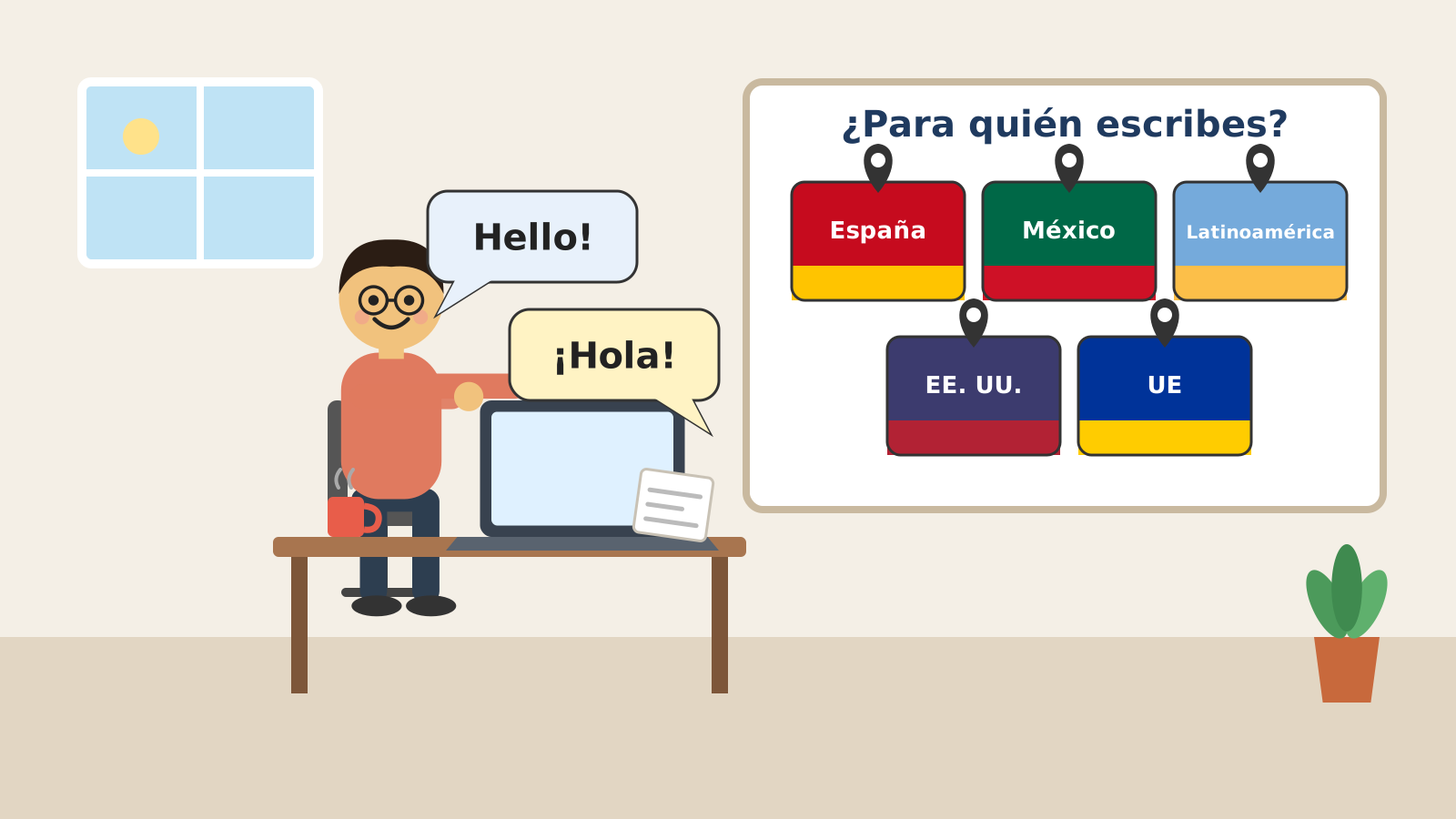
If you work as a freelance English to Spanish translator, the first question a serious client asks isn’t “do you speak Spanish?” It’s “which Spanish?” Spain, Mexico, the United States, and the rest of Latin America don’t read the same Spanish, and clients who have been burned by a generic translation know it. That single distinction — choosing a market and a variety instead of offering “Spanish” in the abstract — is what separates translators who stay busy from translators who compete on price alone.
This guide maps where the real demand for English to Spanish translation sits in 2026: which source documents exist, who reads the Spanish version, which marketplaces and associations are worth your time, and how to reach direct clients who pay properly. It follows the same research approach as our guides for Spanish to English and Portuguese to English freelancers, adapted to a pair with its own logic: English to Spanish is less about translating what already exists in Spanish, and more about localizing content that a growing, English-speaking tech and corporate world wants to sell, explain, or publish to nearly 500 million Spanish speakers.
Why English to Spanish Is a Distinct Market
English to Spanish is one of the highest-volume pairs in the industry, which means plenty of work — and plenty of competition from generalists who will undercut on rate. Standing out means understanding exactly where the English source material comes from and exactly who the Spanish version is for, because in this pair those are rarely the same market.
Where the English source content comes from
Unlike pairs where both sides are national markets, English to Spanish source text is often written for a global audience from the outset: software interfaces, SaaS product documentation, e-commerce listings, corporate websites, training material, marketing campaigns, academic and scientific publishing, and increasingly AI-generated or AI-assisted first drafts that need a native editor’s hand. A large share of this material originates in the United States and the United Kingdom, but a growing portion comes from companies in Northern Europe and Asia that write their master content in English before localizing it into dozens of languages, Spanish included.
Where the Spanish-speaking readers are
This is the decision that shapes everything else in your positioning. The main varieties clients ask for are:
- es-ES (Spain): formal “vosotros” forms in some contexts, a distinct legal and administrative register, and its own terminology for technology and finance.
- es-MX (Mexico): the largest single national market, with its own regulatory vocabulary and a strong demand from both local business and the labelling requirements described below.
- es-US (United States): written for the US Hispanic population — tens of millions of readers — usually in a neutral, accessible register that avoids country-specific slang.
- es-419 (“Latin American neutral”): the compromise variety multinational companies request when a single Spanish version has to work across Argentina, Chile, Colombia, Peru and beyond.
Offering a named variety, rather than “Spanish,” is the fastest way to look like a specialist rather than a generalist.
Typical demand by sector
The sectors that consistently hire English to Spanish freelancers include software and SaaS localization (UI strings, help centres, release notes), e-commerce (product listings, marketing emails, customer service macros), legal and immigration documentation for the US Hispanic market, marketing and advertising transcreation, medical and pharmaceutical patient materials, finance and fintech disclosures, tourism and hospitality content aimed at Spanish-speaking travellers, and academic or scientific publishing.
Translation Marketplaces and Job Boards
Marketplaces won’t be your only source of work in such a competitive pair, but they are a reasonable place to build a track record and your first reviews.
ProZ.com
Still the industry’s main directory for this pair. A complete profile that states your variety of Spanish, your specialisations, and your rate range filters out the wrong leads before they reach you. The KudoZ terminology forum is also a quiet way to build visibility among agencies that search it for specialists.
TranslatorsCafé
Smaller than ProZ, which means less competition for each posted job — worth keeping a profile here even if it’s not your main channel.
General freelance platforms
On Upwork, Fiverr, or Workana, English to Spanish is flooded with low-rate generalist bids. The platforms still work if you apply only to listings that name a sector or a variety, and write a proposal that addresses that specific brief rather than a template.
Increasingly where localization managers at tech and e-commerce companies actually look. A headline that names your variety and specialisation (“English–Spanish (Mexico) SaaS localization”) outperforms a generic “Freelance Translator” title.
Professional Associations and Their Directories
Association membership signals vetting that a marketplace profile can’t.
Spain: Asetrad and APTIC
Asetrad’s public directory is searched directly by Spanish agencies and public bodies. APTIC, based in Catalonia, is a strong option if you also work into Catalan or with Barcelona-based agencies.
Mexico and Latin America
Mexico’s Colegio Mexicano de Intérpretes de Conferencias and the network of peritos traductores registered with state courts are worth joining if sworn or certified work interests you. Argentina’s Colegio de Traductores Públicos and similar bodies elsewhere in the region offer directories that agencies in those countries check first.
United States: ATA
The American Translators Association runs an English-to-Spanish certification exam that carries real weight with US agencies and courts, plus a membership directory that US-based clients search when they need a vetted translator rather than a marketplace bid.
Translation Agencies: How to Approach Them Properly
A five-step approach consistently works better than a mass application: research the agency’s actual specialisations before applying; apply only to the language-pair and subject-matter combinations you genuinely cover; complete their test translation carefully rather than quickly, since this is often the only sample they judge you on; follow up once, politely, after two to three weeks if you hear nothing; and once approved, confirm your availability calendar promptly when work arrives, since reliability gets you repeat assignments more than price does.
Direct Clients: Where the Best Work Usually Is
Direct clients take longer to find than agency work but consistently pay more, since there’s no intermediary margin. For English to Spanish, the strongest groups are:
Tech and SaaS companies localizing into Spanish
Growth-stage software companies expanding into Spain, Mexico, or the broader Latin American market need ongoing localization of interfaces, help centres, and onboarding emails — often recurring, predictable work once you’re their trusted linguist for the pair.
E-commerce sellers and marketplaces
Brands entering the Mexican or Spanish market through Amazon, Mercado Libre, or their own storefronts need product listings, customer service templates, and marketing emails translated and, often, adapted rather than translated literally.
Law firms and immigration services
In the United States especially, immigration attorneys and legal aid organisations need certified translations of birth certificates, divorce decrees, and supporting documents for Spanish-speaking clients — steady, well-defined work once a firm trusts your certifications.
Tourism and hospitality
Hotels, airlines, and tour operators courting Spanish-speaking travellers — whether from Spain or across Latin America — frequently have English-only booking sites and guest communications that a native Spanish translator can visibly improve.
NGOs and international development organisations
Organisations working in Latin America or with Spanish-speaking migrant communities regularly need English policy and programme material translated for the communities they serve, and often budget for this specifically rather than treating it as an afterthought.
Using LinkedIn effectively
Search for localization managers, content managers, and international marketing leads at companies that have announced expansion into Spanish-speaking markets, and reach out with a short, specific message referencing their actual product or market rather than a generic pitch.
Public Institutions, International Organisations and Tenders
Spanish is an official language of the European Union and the United Nations, which keeps a standing need for English-to-Spanish translators on both institutions’ freelance rosters and through their periodic open tenders. National governments in Spain and across Latin America also run public procurement platforms for translation services, usually requiring registration and, often, a sworn-translator credential for official document work.
Sworn and Certified Translation in This Pair
Rules differ sharply by country. In Spain, only a traductor-intérprete jurado appointed by the Ministry of Foreign Affairs can produce a legally valid sworn translation — the credential is checked through the ministry’s own public registry. In Mexico, state courts appoint peritos traductores for official work. In the United States, there is no government sworn-translator title; instead, USCIS and most courts accept a translation accompanied by a signed certificate of accuracy from the translator, which makes ATA certification a strong, though not legally mandatory, credential to hold.
Networking Events and Conferences
ATA’s annual conference, Asetrad’s events in Spain, regional ProZ.com powwows, and Spanish-language-industry gatherings such as those organised by Mexican and Argentine associations are all worth attending at least once — direct-client and agency relationships in this field are still built largely through people who’ve met in person.
How to Stand Out as a Freelance English to Spanish Translator
Specialise, then specialise again
“English to Spanish” alone describes thousands of competitors. “English to Mexican Spanish, SaaS and fintech localization” describes a handful, and it’s the version of your profile that gets remembered and referred.
Write flawless, consistent Spanish
Clients who can’t evaluate your English can absolutely evaluate whether your Spanish reads naturally, stays consistent in its variety and register from the first line to the last, and avoids the telltale literal-translation syntax that marks out a rushed job.
Certifications and qualifications
ATA certification matters most for US-facing work; a sworn-translator appointment matters most for Spain and much of Latin America; a translation degree or equivalent professional experience matters everywhere as a baseline credibility marker.
CAT tools and technology
Fluency in SDL Trados Studio, memoQ, or Phrase is close to a baseline expectation for agency and SaaS localization work. Machine-translation post-editing is now a standard, separate service line in this pair — worth offering explicitly rather than treating as something to avoid.
Rates context
Benchmark against ATA and Asetrad rate surveys rather than against the lowest bids on a marketplace — English to Spanish has enough volume that clients who value quality will pay accordingly, and racing to the bottom mainly attracts clients who will keep asking for discounts.
Your First 30 Days: A Step-by-Step Action Plan
- Days 1–5: pick your primary Spanish variety and one or two sectors; rewrite your professional profile and bio around them.
- Days 6–10: complete your ProZ.com and TranslatorsCafé profiles; join Asetrad or your relevant national association.
- Days 11–15: apply to five to ten agencies that genuinely match your pair and specialisation, completing every test translation carefully.
- Days 16–20: identify twenty potential direct clients (tech companies, law firms, tourism businesses) and send five personalised outreach messages.
- Days 21–25: optimise your LinkedIn headline and post one piece of content relevant to your niche.
- Days 26–30: review what generated responses, double down on it, and set a simple weekly routine for ongoing outreach.
Common Mistakes to Avoid
- Marketing yourself as a generalist “English to Spanish” translator instead of naming a variety and a specialisation.
- Mixing varieties of Spanish within the same document, which is one of the fastest ways to lose a client’s trust.
- Competing purely on rate in a pair with enormous low-cost competition, rather than on specialisation and reliability.
- Ignoring certified and sworn translation rules, which differ by country and can disqualify an otherwise excellent translation.
- Treating machine-translation post-editing as beneath the job, rather than as a distinct, billable service many clients now expect.
Frequently Asked Questions
Do I need to be a native Spanish speaker to translate English into Spanish?
It isn’t a strict requirement, but most clients prefer it and will judge your work primarily on how natural the Spanish reads — which, in practice, favours native or near-native speakers of your target variety.
Which variety of Spanish should I offer if I’m not sure?
Start with the variety closest to your own background or location, and be explicit about it in your profile. You can add a second variety later once you understand its specific terminology and conventions.
Is ATA certification worth it for English to Spanish?
Yes, particularly if you want US-based agency and legal work — it’s one of the few credentials US clients can verify instantly, even though it isn’t a legal requirement outside specific court contexts.
Can I handle certified translations for USCIS or Spain’s sworn-translation requirements myself?
For USCIS, yes — any competent translator can certify a complete and accurate translation with a signed statement. For Spain’s legally sworn translations, no — only a traductor-intérprete jurado appointed by the Ministry of Foreign Affairs can issue one.
Should I use machine translation in this pair?
Many agencies and direct clients now explicitly request MT post-editing as a separate, lower-cost service tier. Offer it transparently alongside full human translation, respect confidentiality requirements around the tools you use, and never present raw machine output as finished human work.
Conclusion
English to Spanish offers more volume than almost any other pair, which cuts both ways: plenty of work, and plenty of translators chasing it. The ones who build a sustainable freelance business are the ones who pick a variety, pick a sector, and combine marketplace visibility, association credibility, and direct outreach instead of relying on any single channel. Start narrow, prove the work is excellent, and the referrals tend to do the rest.