Where to Look for Clients if You Are a Freelance Spanish to English Translator
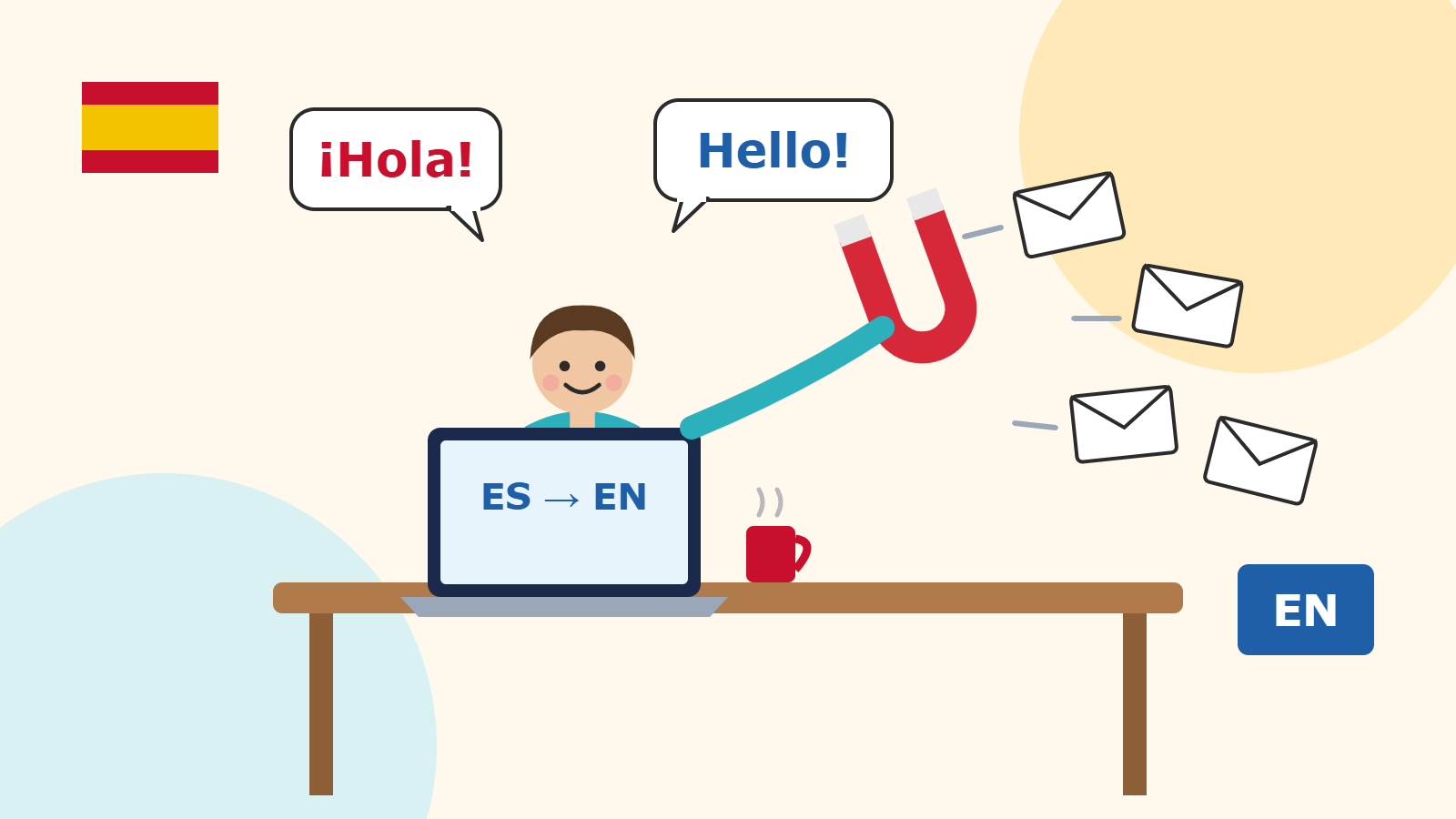
If you work as a freelance Spanish to English translator, you are in one of the largest and most competitive language combinations in the world. That is both good news and bad news. The good news: the demand is enormous, it comes from dozens of countries, and it covers almost every sector you can imagine. The bad news: so many people offer this pair that “I translate from Spanish into English” is not, on its own, a reason for anyone to hire you. This guide walks through where the work actually comes from, where to find the people who pay for it, and how to position yourself so that you are found first.
Video: 5 places to find Spanish to English clients
Short on time? This video sums up the five main client sources covered in this guide.
Why Spanish to English Is a Special Market
Spanish is an official language in around twenty countries, and English is the main language of business, science, finance and international law. That creates a constant flow of documents that start life in Spanish and need to reach English-speaking readers. The work comes from several very different markets at once.
Where the Spanish source documents come from
- Spain: companies exporting goods and services, tourism and hospitality, renewable energy, infrastructure and engineering firms bidding abroad, universities and research centres publishing in English, wine and food producers, law firms with international clients, and a growing video game and digital content sector.
- Mexico: manufacturing and automotive supply chains linked to the United States, cross-border trade, mining, financial services, and a high volume of personal and legal documents for people moving to or dealing with the US.
- South America (Argentina, Chile, Colombia, Peru and others): mining and energy reports, agribusiness, fintech and tech start-ups looking for foreign investors, academic papers, and legal documents for international arbitration and investment.
- International organisations: bodies that work in both languages, such as the United Nations system, the European Union institutions and regional development banks, produce large amounts of Spanish-language material that has to be available in English.
Where the English-speaking readers are
The buyers are not always where the readers are: a Chilean mining company may pay for a text aimed at Canadian investors, and a US immigration lawyer may need a Guatemalan birth certificate in English. The main destination markets are:
- United States: the single largest buyer, driven by immigration, courts, healthcare, insurance, trade with Latin America and the large Spanish-speaking population.
- United Kingdom and Ireland: tourism, legal and financial work, property transactions in Spain, and academic publishing.
- Canada, Australia and New Zealand: mining, energy, immigration and education.
This matters for your marketing. Decide early whether you write US English, UK English, or both convincingly, and say so clearly in your profiles. A client who sells to Texas does not want “colour” and “favour”, and a London law firm will notice American legal terminology immediately.
Typical demand by sector
- Legal: contracts, powers of attorney, court judgments, company deeds, arbitration documents, and notarial instruments. Spanish legal systems vary from country to country, which rewards translators who understand the differences between, for example, Spanish and Mexican legal concepts.
- Immigration and personal documents: birth, marriage and death certificates, academic transcripts, police certificates and diplomas. In the United States, USCIS requires that any foreign-language document submitted be accompanied by a full English translation that the translator has certified as complete and accurate, together with a statement that the translator is competent to translate from the foreign language into English. This is a steady, repeatable source of work.
- Medical and life sciences: clinical trial documents from Latin American sites, patient records, medical reports for insurance claims, and research papers.
- Financial: annual reports, audit documents, investment memoranda, banking and fintech material.
- Technical and energy: engineering specifications, environmental impact studies, solar and wind project documentation, mining reports.
- Marketing, tourism and e-commerce: websites, hotel and restaurant content, product descriptions for online stores, wine and gastronomy. This is where transcreation skills earn real money.
- Academic: researchers in Spain and Latin America who need their papers in English for international journals. Many will pay for translation plus language editing.
- Games, audiovisual and publishing: subtitles for Spanish-language series and films, games developed in Spain and Latin America, and literary translation.
Translation Marketplaces and Job Boards
Marketplaces are crowded in this pair, so as a freelance Spanish to English translator, treat them as one channel among several, not your whole strategy.
ProZ.com
ProZ.com is the best-known marketplace for professional translators. Spanish to English jobs appear constantly, but they attract many bids. To make it work for you:
- Complete your profile fully, with your specialisations, CAT tools and a clear statement of your English variety.
- Use the Blue Board to check agencies before accepting work from them.
- Answer KudoZ terminology questions in your specialist fields to build visibility.
TranslatorsCafé
TranslatorsCafé works on a similar model, with a job board, a translator directory and a reputation system for outsourcers. It has less traffic than ProZ.com, but also less competition per job.
General freelance platforms
Upwork and similar platforms have many Spanish to English requests, often from small businesses, start-ups and individuals who have never worked with a translator before. Focus on specialised jobs (for example “Spanish to English translation of clinical study protocol”) rather than generic ones, and write proposals that show you understood the specific project.
LinkedIn is a marketplace in all but name for this pair. Project managers at agencies, in-house legal teams, marketing managers in Spain and Latin America and researchers all use it. More on how to use it below.

Professional Associations and Their Directories
Associations are one of the most underrated client channels. Their public directories are used by agencies, law firms and private clients who want someone vetted. Choose the ones that match where your clients are.
United States: ATA
The American Translators Association (ATA) is the main professional body in the US. Its online directory is searched by clients looking for translators by language pair and specialisation. The ATA certification exam is offered for Spanish into English, and being “ATA-certified” is a recognised signal in the US market, particularly for legal, immigration and corporate clients. The ATA also has a Spanish Language Division, which is a good place to network with colleagues who work with Spanish in both directions, and an annual conference where many agencies attend and recruit.
United Kingdom: ITI and CIOL
In the UK, the Institute of Translation and Interpreting (ITI) and the Chartered Institute of Linguists (CIOL) both run public directories that clients use to find qualified translators. The CIOL’s Diploma in Translation is a well-respected postgraduate-level qualification and is available with Spanish as a source language into English. Membership levels that require proven experience or qualifications help you stand out to UK law firms, solicitors handling Spanish property matters and public-sector buyers.
Spain and Latin America
Do not forget associations in the source-language countries. Spanish clients often look for translators through local channels:
- Asetrad (Asociación Española de Traductores, Correctores e Intérpretes) has a members’ directory and organises training and events in Spain.
- In Latin America, national translator associations and the professional colleges for public translators (for example in Argentina) are worth exploring, especially if you can collaborate with Spanish-native colleagues who translate in the opposite direction and need a reliable English partner.
A practical tip: colleagues who translate English into Spanish are one of your best referral sources. Their clients often need work in your direction too, and they would rather recommend someone they trust than let the client go to a large agency.
Translation Agencies: How to Approach Them Properly
Agencies still provide a large share of Spanish to English work, especially in legal, medical, financial and technical fields. The challenge is that agencies receive many applications in this pair every week. Here is how to get noticed:
- Target the right agencies. Look for agencies that specialise in your field (life sciences, legal, financial) or in Spanish-speaking markets. A boutique agency in Madrid or Mexico City that sends most of its work out of Spanish into English is often a better fit than a giant multinational.
- Use their application process. Most agencies have a vendor portal. Fill it in completely, even though it is tedious; incomplete applications rarely get a test.
- Send a short, specific email when possible. Address the vendor manager by name, state your pair and English variety, list two or three specialisations with concrete experience, mention your CAT tools, and attach a one-page CV. Avoid mass emails with dozens of agencies in copy.
- Treat the test seriously. Agencies in this pair often reject candidates on style, not accuracy. A translation that reads like translated Spanish will fail even if every term is correct.
- Be reachable and reliable. Once you are in the database, response time and meeting deadlines matter as much as quality. Many agencies send jobs to the first good translator who replies.

Direct Clients: Where the Best Work Usually Is
For a freelance Spanish to English translator, direct clients usually pay more and give you more control, but they take longer to find. In Spanish to English, these are the most promising groups:
Law firms and immigration lawyers
Immigration lawyers in the United States need certified translations of civil documents all the time. International law firms in Spain, Mexico and South America need contracts, judgments and arbitration documents in English. Approach them with a specific offer: fast turnaround on certified document translations, or specialisation in a particular area such as corporate, real estate or arbitration.
Exporters and companies seeking foreign investment
Spanish and Latin American companies that export, look for investors or bid for international contracts need English versions of websites, catalogues, technical documentation and investor materials. Trade fairs, chambers of commerce and export promotion bodies are good places to find them.
Tourism and hospitality
Hotels, rural tourism businesses, wineries, restaurants and tour operators in Spain and Latin America sell directly to English speakers. Poorly translated websites are common in this sector, which gives you an easy opening: a polite note pointing out what their English-speaking customers see, with an offer to fix it, can work better than any generic advertisement.
Universities and researchers
Researchers in Spain and Latin America are under pressure to publish in English-language journals. Many universities have language services or lists of recommended translators and editors.
Using LinkedIn effectively
- Make your headline specific: “Spanish to English legal translator (US English) – contracts and arbitration” works better than “Translator”.
- Connect with vendor managers, in-house lawyers, export managers and marketing directors in your target sector.

Video: How to Find Direct Clients as a Freelance Translator
If you prefer watching to reading, this video from Adrian Probst (Freelanceverse) walks through practical ways to find and approach direct clients — a perfect companion to this section.
Watch it on YouTube: https://www.youtube.com/watch?v=ruZq-QOnXak
Public Institutions, International Organisations and Tenders
For experienced translators, institutional work can provide stable volume.
- European Union: English is a working language of the EU institutions and Spanish is an official EU language, so EU bodies translate Spanish into English. The European Commission’s Directorate-General for Translation publishes information on its freelance translation tenders and contracts. These tenders are usually won by companies or consortia, but many of them subcontract to freelancers. Staff and temporary positions are recruited through EPSO competitions, which normally require at least two source languages.
- United Nations: Spanish is one of the six official UN languages. The UN recruits English translators through competitive examinations for language professionals, and English translators are generally expected to work from French plus at least one other official language, so Spanish alone is not enough. If you have French as well, it is a serious career option, and UN bodies also use contractual (freelance) translators.
- National tenders: government buyers in the UK and US publish translation contracts on public procurement portals such as the UK’s Find a Tender service and the US SAM.gov. These are usually won by language service companies, but knowing who won a contract tells you which agencies to approach.
Sworn and Certified Translation in This Pair
Official translation works very differently depending on the country, and understanding this opens doors:
- United States: there is no federal “sworn translator” title. For immigration, a translator’s certification of accuracy and competence is what USCIS requires. Some documents for other uses may need notarisation of the translator’s signature. Being ATA-certified is not legally required, but many clients feel more confident with it.
- United Kingdom: there is no state-appointed sworn translator either. Certified translations are usually issued by qualified translators or companies, often members of ITI or CIOL, with a signed statement of accuracy.
- Spain: the Ministry of Foreign Affairs appoints Traductores-Intérpretes Jurados (sworn translators-interpreters), mainly through an official examination. A sworn appointment for English allows you to produce official translations accepted by Spanish authorities. Requirements include holding the nationality of an EU or EEA member state and passing the exam; check the current rules on the Ministry’s website before planning around it.
- Latin America: several countries have their own systems for official translators, such as public translators in Argentina or court-appointed expert translators in Mexico. These usually require local qualifications, so if you are not eligible, partner with local official translators who need an English-native reviser.
Networking Events and Conferences
- ATA Annual Conference: one of the largest gatherings of translators and agencies in the world, with sessions specific to Spanish.
- ITI and CIOL events in the UK, including conferences and regional network meetings.
- Asetrad and other Spanish associations’ events, plus translation conferences in Spain and Latin America, where you can meet colleagues working into Spanish who could refer clients.
- Industry events in your specialisation: a legal translator often gains more from a conference for international lawyers than from another translation event.
How to Stand Out as a Freelance Spanish to English Translator
Specialise, then specialise again
“Legal” is a start; “Spanish to English translation of Latin American mining and energy contracts” is a position. Narrow specialisations make you easier to remember and easier to recommend, and they justify better rates.
Write excellent English
In this pair, clients judge a freelance Spanish to English translator mostly by the quality of their English. Spanish tends towards long, clause-heavy sentences; good translators restructure them into clear, natural English.
Certifications and qualifications
- ATA certification (Spanish into English) for the US market.
- The CIOL Diploma in Translation and ITI qualified membership for the UK market.
- A master’s degree in translation or a degree in your specialist field (law, medicine, engineering) adds credibility.
CAT tools and technology
Most agencies expect you to work in a CAT tool such as Trados Studio, memoQ or Phrase, and to handle machine translation post-editing requests professionally. Offer services that machines cannot provide well: transcreation, certified translation, specialist revision and terminology work.
Rates context
Because the pair is so widely offered, generic work is under price pressure, while specialised and direct-client work holds up better. Check association rate surveys and talk to colleagues in your niche rather than competing on price.
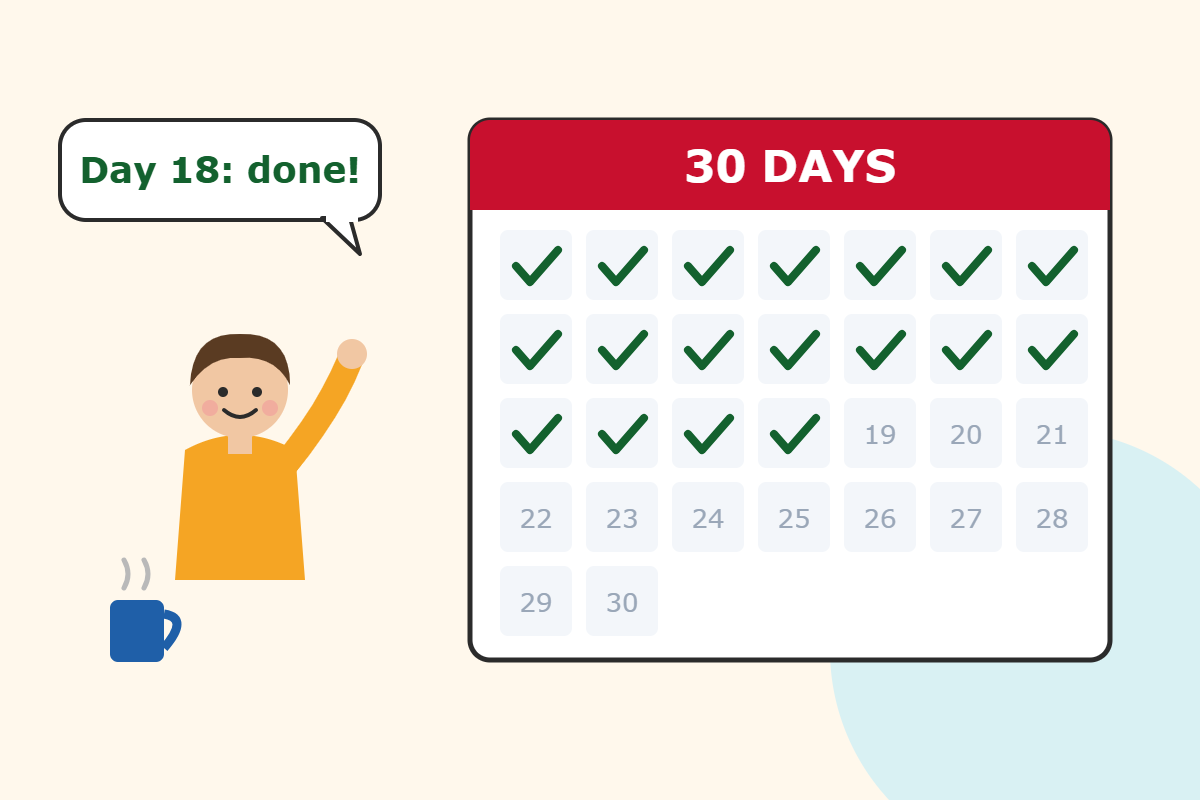
Your First 30 Days: A Step-by-Step Action Plan
- Days 1–3: Define your position. Choose one or two specialisations, your English variety (US, UK or both) and the regional Spanish you know best. Write a one-sentence description of what you do.
- Days 4–7: Build your base. Update your CV, write a short bilingual LinkedIn profile, and complete your ProZ.com and TranslatorsCafé profiles. Prepare two or three short sample translations in your specialisations (using texts you are allowed to share).
- Days 8–12: Join an association. Join the association that matches your main market (ATA, ITI, CIOL, Asetrad) and create your directory profile. Look into certification requirements and dates.
- Days 13–18: Approach agencies. Make a list of 20 agencies specialising in your field or in Spanish-speaking markets. Apply to each one properly, one at a time.
- Days 19–24: Approach direct clients. Identify 15–20 potential direct clients (law firms, exporters, hotels, research groups) and send personalised messages or LinkedIn connection requests.
- Days 25–28: Build referral relationships. Contact colleagues who translate English into Spanish and propose mutual referrals and revision.
- Days 29–30: Review and repeat. Note which channels produced responses, follow up politely with those who did not reply, and plan the next month.
Common Mistakes to Avoid
- Being a generalist in a crowded pair. “I translate anything from Spanish” makes you invisible.
- Ignoring English variety. Mixing US and UK conventions in the same text looks careless.
- Translating structure instead of meaning. Literal Spanish syntax produces English that clients will notice immediately.
- Competing only on price. There will always be someone cheaper. Compete on specialisation, reliability and quality.
- Overlooking the source markets. Many translators only market to English-speaking countries, but many buyers are in Spain and Latin America.
- Not checking payment practices. Always check new agencies and agree terms in writing.
Frequently Asked Questions
Do I need to be a native English speaker to translate Spanish into English?
It is not a legal requirement, but most agencies and many direct clients in this pair prefer native English translators, because quality is judged mainly on the English text. Non-native translators can succeed, but usually need strong qualifications and excellent samples.
Is ATA certification worth it for Spanish to English?
If you target the US market, it is a recognised credential that many clients and agencies value, and it can make you more visible in the ATA directory. It is not mandatory to work, and for UK-focused translators ITI or CIOL credentials are more relevant.
Which specialisations are most in demand?
Legal, immigration documents, medical and life sciences, financial, technical (especially energy and mining) and marketing/tourism are consistently in demand. The best choice is the field where your background is strongest.
Can I do certified translations for USCIS?
Yes. USCIS requires a complete English translation and a certification from the translator stating that the translation is complete and accurate and that the translator is competent to translate from the foreign language into English. No specific official title is required.
Should I use machine translation in this pair?
Understand post-editing, be transparent with clients, follow their confidentiality rules, and never present unrevised machine output as human translation.
Conclusion
Spanish to English is a huge market, but it rewards translators who stop thinking of themselves as “Spanish to English translators” and start thinking of themselves as specialists who solve a specific problem for a specific kind of client. Combine marketplaces and agencies for early volume, associations and certification for credibility, and direct clients in Spain, Latin America and the English-speaking world for long-term growth. As a freelance Spanish to English translator, choose your niche, show your expertise clearly, and keep in touch with the colleagues and clients you meet along the way.
Related articles
About the author: Viorel Tiple is the founder of traductoresnativos.com, a translation service working with native translators in Spanish, English, Finnish, European Portuguese, Ukrainian and Russian. He writes about the translation profession and how freelance translators can find and keep good clients.