Where to Look for Clients if You Are a Freelance Portuguese to English Translator
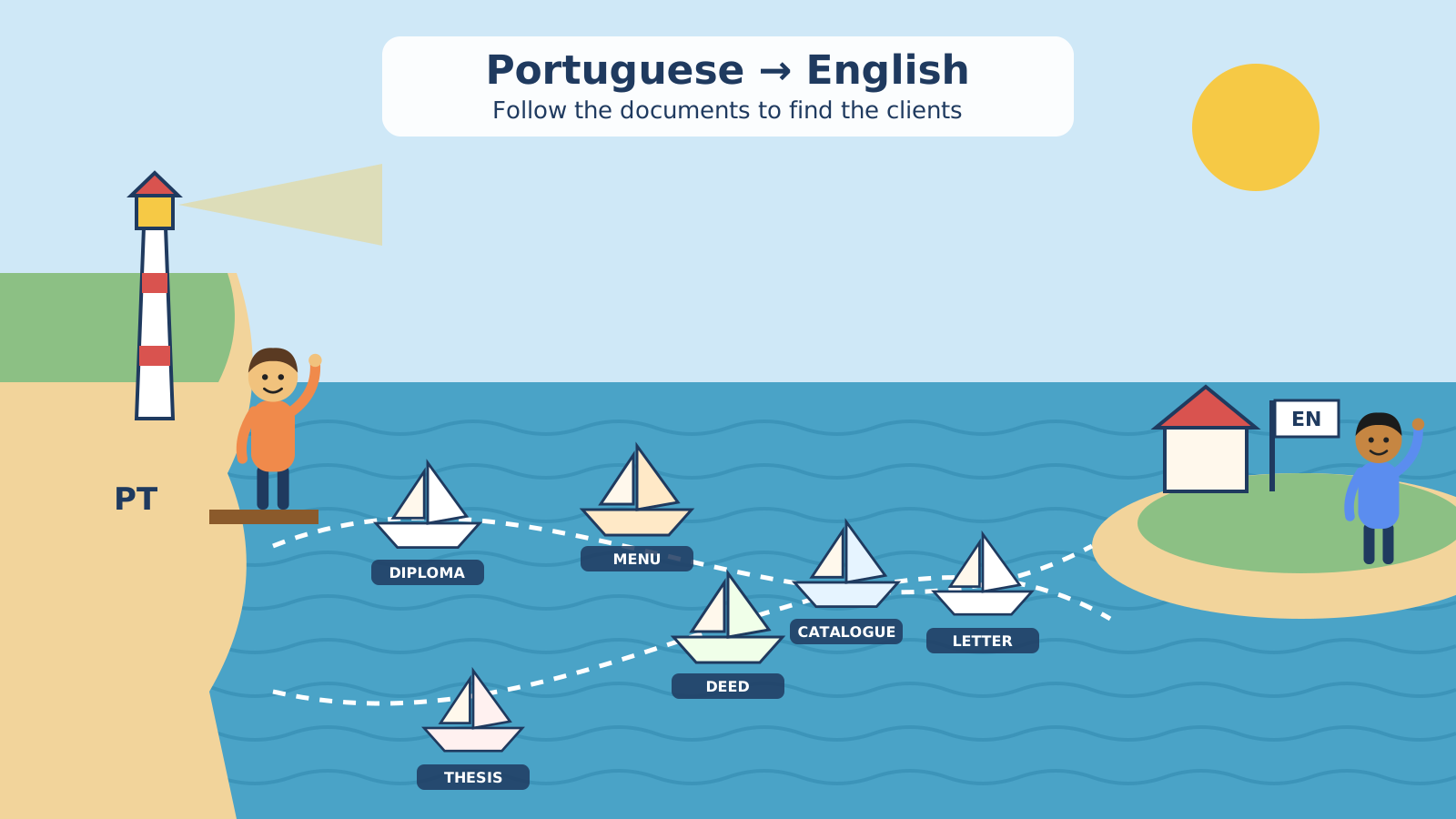
If you work as a freelance Portuguese to English translator, the most useful question is not “who buys translations?” but “where is this piece of paper going?”. Almost every job in this direction starts with a document, a product or a person leaving Portugal (or another Portuguese-speaking country) for somewhere that reads English. Learn to follow those journeys and you will know exactly where your next clients are waiting.
A quick word on who is writing. Traductores Nativos is a search platform where people and companies find a native translator and get in touch with that translator directly, with no agency sitting in the middle and adding its margin. Translators run their own profile pages, reviews from clients are public, and payment can go through a guarantee service. That is why this guide leans towards clients who hire a translator themselves rather than through a chain of subcontractors.
Below you will find six routes that Portuguese texts travel to reach English readers, the people at each departure gate who need you, the traps this language direction sets, and how to make sure those clients can actually find you.
Video: six routes from Portuguese paperwork to English-speaking clients
Short on time? This narrated summary walks through the six routes, the direct-contact shortcut and the first steps to take this month.
Follow the paperwork, not the language
Into-English translation is a crowded field, and Portuguese into English is no exception: as a freelance Portuguese to English translator, you share the market with translators in Lisbon, Porto, London, Boston, Toronto and São Paulo. What separates the busy ones from the waiting ones is rarely talent. It is knowing which moments in someone’s life or business create an urgent need for an English version, and being visible at that exact moment.
Here is a useful filter. For each potential client ask three things: What is the document? Who will read the English version? What happens if that reader misunderstands it? The higher the stakes of the third answer, the more willing the client is to pay a professional, and the more likely they are to search for one personally instead of asking a cousin who “speaks good English”.
Route 1: certificates that emigrate with their owners
Portugal has a long tradition of emigration, and large Portuguese communities live in the United Kingdom, Ireland, the United States, Canada and Australia. Every family that moves, every student who applies to a foreign university and every nurse or engineer who registers with a professional body abroad carries a folder of Portuguese documents: birth and marriage certificates from the Civil Registry, criminal record certificates, diplomas, academic transcripts, payslips and employment references.
Why the demand concentrates outside the EU
Inside the European Union, Regulation (EU) 2016/1191 lets citizens request multilingual standard forms for certain public documents, such as birth or marriage certificates, so a Portuguese certificate can often travel to Germany or Belgium without a translation. That shortcut does not exist for the UK, the US, Canada or Australia. In other words, the countries where English is the language of the administration are exactly the ones where Portuguese documents still need a full translation. That is good news for you.
What English-speaking authorities ask for
- United Kingdom: the official GOV.UK guidance on certifying a document says the translator should confirm in writing that the translation is a true and accurate translation of the original, and add the date, their full name and contact details. Universities and UK ENIC (the national agency that compares foreign qualifications) typically ask for translations of diplomas and transcripts in the same spirit.
- United States: immigration filings with USCIS need a complete English version of each foreign-language document, accompanied by a signed statement in which the translator vouches both for the accuracy of the work and for their own competence in Portuguese and English (8 CFR 103.2(b)(3)).
- Canada, Australia and Ireland: each has its own wording and, in some cases, a preference for translators accredited in that country. Read the specific instructions the client received before quoting; the receiving office, not the translator, sets the rules.
Who contacts a freelance Portuguese to English translator on this route? Mostly private individuals and their families, plus immigration consultants, international recruitment firms that place Portuguese health professionals abroad, and student advisers. They search on Google, ask in community groups and browse platforms where they can see a translator’s reviews before writing to them.
Route 2: letters that land in English-speaking letterboxes in Portugal
The reverse journey is just as busy. Portugal has become home to many British, Irish, American, Canadian and other English-speaking residents: retirees in the Algarve, remote workers in Lisbon, families in the Silver Coast towns, investors in Porto. They live in Portuguese, but their mail does not come with subtitles.
Think of what arrives in those letterboxes: notices from the tax authority (Autoridade Tributária e Aduaneira), letters from AIMA, the agency that took over immigration matters from SEF in 2023, tenancy agreements, condominium meeting minutes, utility contracts, deeds signed before a notary when buying property, school reports, medical appointment letters, and court or council correspondence. Many of these readers do not need a certified translation at all; they simply want to understand, accurately and quickly, what they are signing or what they are being asked to do.
This is a perfect direct-client market because the buyer is the reader. Good places to meet them:
- Relocation consultants and property lawyers who serve foreign buyers and regularly need English versions of promissory contracts and deeds for their clients’ files.
- Real estate agencies and condominium managers in areas with many international owners, who prefer one reliable translator for minutes, regulations and notices.
- Accountants and tax advisers working with non-Portuguese residents, whose clients ask “what does this letter mean?” every week.
- International schools and community associations, where a talk on “understanding Portuguese paperwork” can bring more enquiries than a year of cold emails.

Route 3: goods that sail out of Portuguese ports
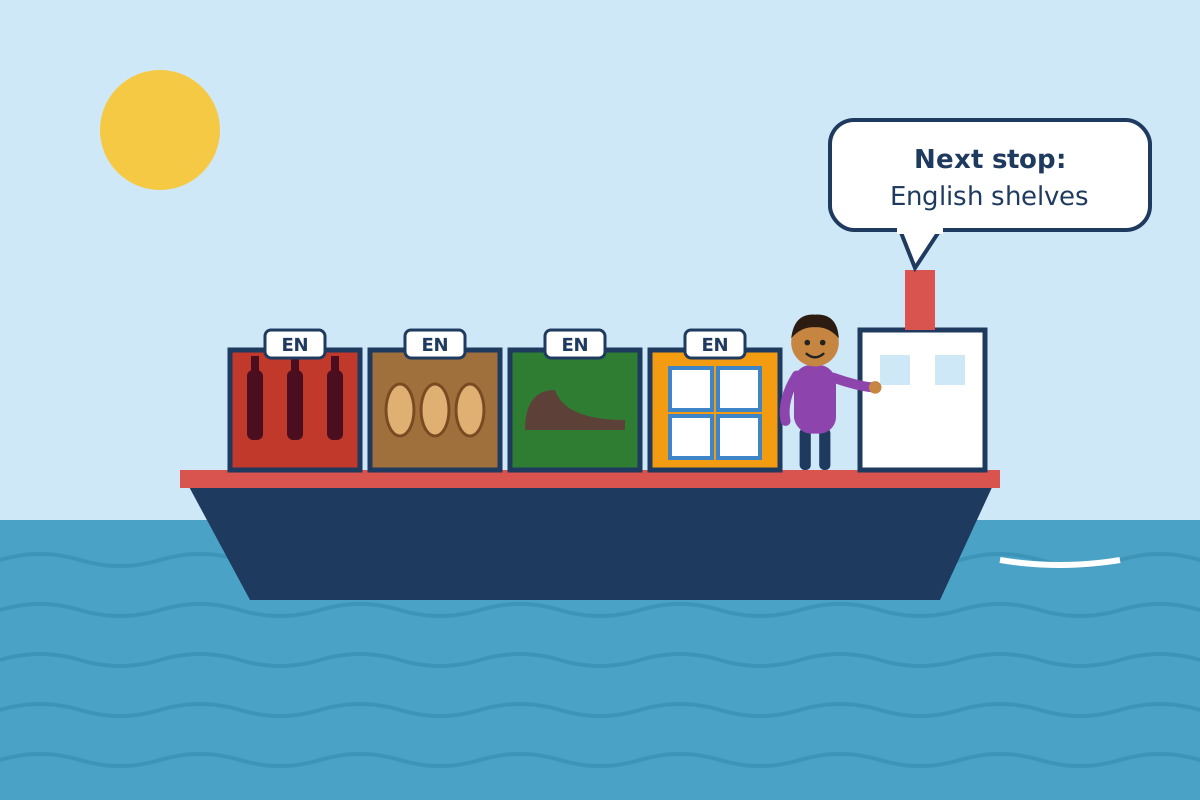
Portuguese exporters punch well above the country’s size in wine, cork, footwear, textiles and clothing, moulds and plastics, furniture, ceramics, olive oil and canned fish. Many of them are family-run small and medium-sized companies without an in-house translator or a marketing department in London. When they decide to sell in the UK, Ireland or North America, they need English for:
- product catalogues, technical data sheets and safety information;
- website pages and online shop listings that must sound natural, not “translated”;
- tasting notes, back labels and winery stories for importers and wine tourism;
- contracts with distributors, quality certificates and tender documents.
AICEP, the Portuguese trade and investment agency, and the regional business associations organise missions and trade fair delegations. Following their calendars tells you which sectors are preparing to sell abroad and when. Bilateral chambers of commerce, such as the Portuguese-British Chamber of Commerce and the American Chamber of Commerce in Portugal, are also worth joining or at least watching, because their member lists are a ready-made map of companies that work in English.
When you approach these firms, show rather than tell. Pick one page of their website, translate it carefully into the variety of English their target market reads, and explain in two lines what the current version is losing: a misleading claim, an awkward slogan, a missing unit conversion. Exporters understand lost sales very quickly.
Route 4: visitors who need the menu to make sense
Tourism brings the English-speaking reader to Portugal instead of sending the text abroad. Restaurants, wineries in the Douro and Alentejo, surf schools, museums, boutique hotels and the many owners of short-term rental properties (alojamento local) all communicate with English-speaking guests every day. Their needs are small but frequent: menus, house rules, booking confirmations, guided-tour scripts, signage and review replies.
Individually these jobs are modest; together they build a steady stream of local clients who come back every season and recommend you to their neighbours. Menus are a classic test of skill: do you keep “bacalhau” and explain it, or translate it as salted cod? Does “polvo à lagareiro” become a description, a transliteration or both? A translator who can make these decisions consistently, with a short glossary the client keeps, is worth far more than a free online tool that turns “pica-pau” into a woodpecker.
Route 5: ideas that want an international audience
Not everything that leaves Portugal is a certificate or a bottle. Ideas travel too, and they usually travel in English.
- Researchers and universities: Portuguese academics publish in international journals, submit project proposals and present at conferences in English. Research centres, PhD candidates and university press offices are direct clients for article translation, abstracts, project summaries and science communication.
- Publishers and authors: the Camões Institute and the Directorate-General for Books, Archives and Libraries (DGLAB) run a programme supporting the translation of works by Portuguese and Portuguese-speaking African authors for publication abroad. Foreign publishers apply for the support, but they need a translator attached to the project, and sample translations help them pitch a book in the first place.
- Startups and tech companies: Lisbon hosts Web Summit, and Porto, Braga and other cities have active startup hubs. Founders need pitch decks, investor updates, product documentation and websites in English, often on very short notice. They value speed and someone who understands their product.
Literary and academic work requires a different voice from paperwork. If you offer both, present them separately in your profile so that a publisher does not land on a page full of birth certificates.
Route 6: Portuguese beyond Portugal
European Portuguese is the written norm followed, with local features, in several countries whose neighbours or partners speak English. That geography quietly creates demand for Portuguese to English work:
- Mozambique is surrounded by English-speaking countries and has been a member of the Commonwealth since 1995. Cross-border trade, mining, energy, logistics and NGO projects in southern Africa generate contracts, reports and correspondence that need English.
- Timor-Leste, where Portuguese is an official language alongside Tetum, became the eleventh member of ASEAN in October 2025, and English is ASEAN’s working language. Laws, reports and project documents moving between Dili and its regional partners are a niche worth watching.
- Angola, Cape Verde, Guinea-Bissau and São Tomé and Príncipe attract international investors, development banks and humanitarian organisations whose reporting language is often English.
- Macao, where Portuguese remains an official language, still produces legal and administrative texts in Portuguese for an English-reading business community.
Clients here include law firms, consultancies, NGOs, development projects and companies investing in the region. Many of them search directly for a translator who understands both the language and the local context, such as a Mozambican legal term or an Angolan company form.
The traps this direction sets
Portuguese and English look friendly enough, but the direction from Portuguese into English has its own pitfalls. These are the points that justify a professional, and they make excellent examples in proposals:
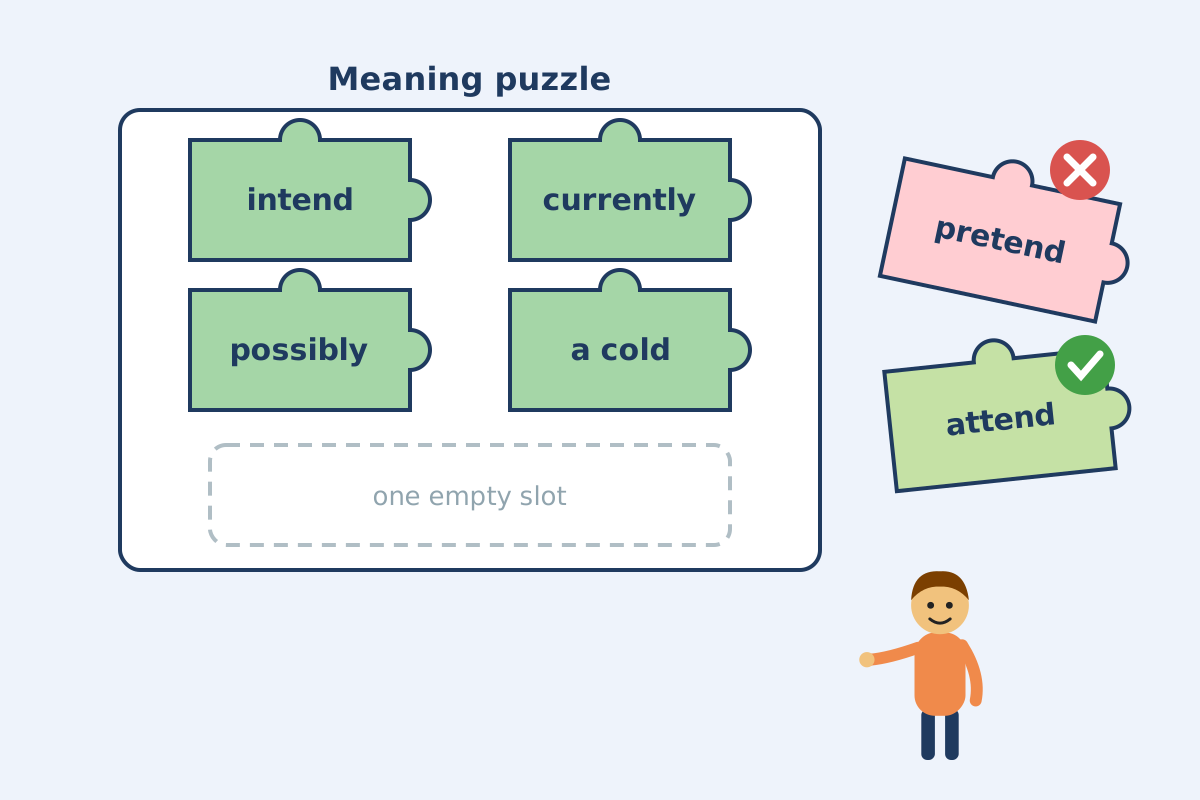
- False friends: pretender means “to intend”, atualmente means “currently”, eventualmente usually means “possibly”, constipação is a cold, puxar is “pull” and assistir often means “to attend” or “to watch”.
- Titles and forms of address: in Portugal “Dr.” is used for most university graduates and “Eng.” for engineers. Rendering them literally in English suggests a doctorate. Formulas such as “Exmo. Senhor” or “V. Exa.” need a natural English equivalent, not a word-for-word copy.
- Administrative concepts: the NIF (tax number), the conservatória do registo civil, the solicitador and the junta de freguesia have no exact English counterpart. Decide whether to keep the term, describe it or add a short note, and stay consistent.
- Sentence length: legal and academic Portuguese tolerate long chains of subordinate clauses and impersonal “se” constructions. Good English usually needs shorter sentences and a clear subject.
- Numbers, dates and capitals: decimal commas become decimal points, thousands separators change, “12 de março de 2026” becomes “12 March 2026” or “March 12, 2026”, and English capitalises months and days of the week.
- Which English? The client often does not know. Ask who will read the text. A UK university, a US court and an Australian employer each expect their own spelling and conventions.
Turning a Traductores Nativos profile into a front door
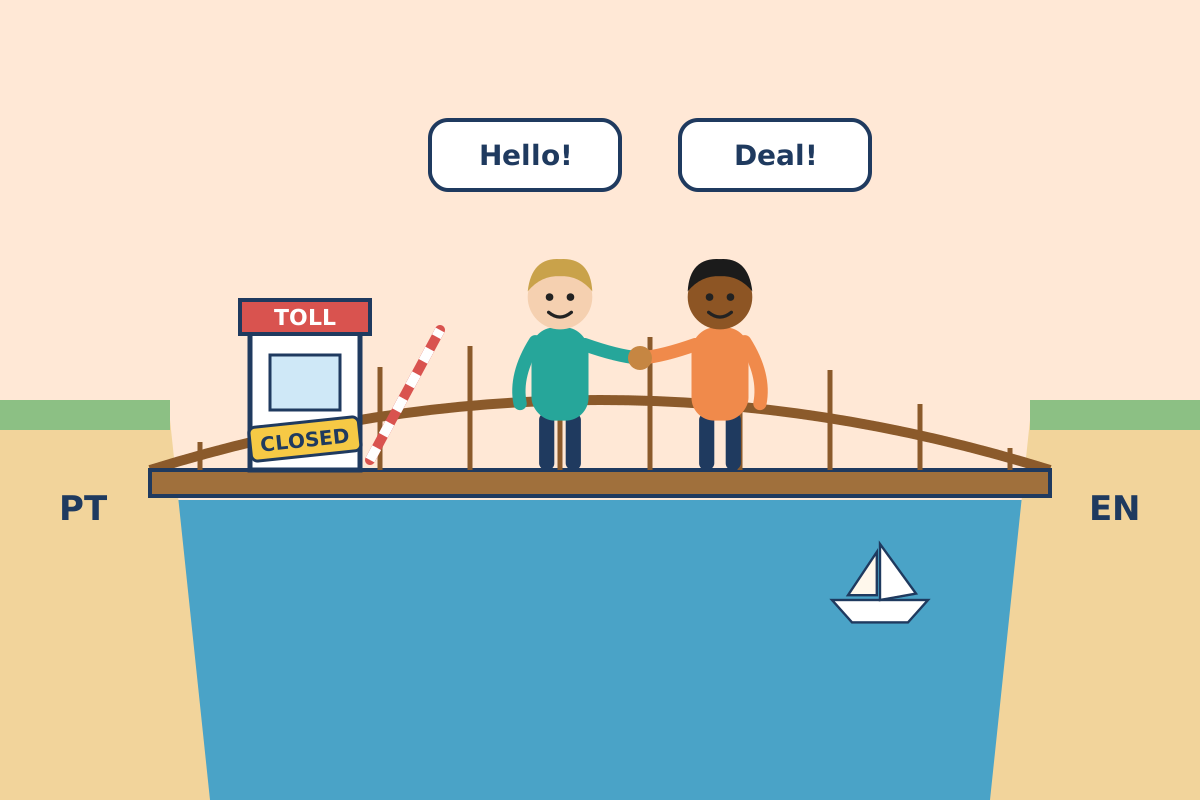
Most of the people on routes 1, 2 and 4 are not translation buyers by profession. They are a nurse moving to Manchester, an American couple who have just bought a flat in Porto, a winery owner in the Douro. They want to see who they are dealing with, read what earlier clients said, and write to that person without going through an agency. That is exactly how Traductores Nativos works: clients find a native translator, contact them directly, can read public reviews, and can use a guarantee service for payment.
To make your profile work for this particular pair:
- Name the documents, not just the language pair. “Portuguese civil registry certificates, diplomas and transcripts, notarial deeds, tenancy agreements, tax letters” tells a client in two seconds that you have seen their kind of paper.
- Say which English you deliver. British, American or both; mention if you know the UK and US certification statements.
- Show the Lusophone range. If you handle documents from Mozambique, Angola, Cape Verde or Timor-Leste, say so. Few profiles do.
- Write a bilingual introduction. Many clients on route 1 write in Portuguese, while route 2 clients write in English. A short paragraph in each language makes both feel welcome.
- Ask happy clients for a review. Reviews are public on the platform, and for a private person sending their birth certificate to a stranger, a few honest reviews are the most persuasive thing on the page.
- Reply fast and clearly. Direct contact only pays off if you answer. A quick message with a clear quote, delivery date and what the client needs to send often wins the job.
Want to be listed? Send us your details through the contact page or write to info@traductoresnativos.com, and tell us which document types and varieties of English you cover.
Where Portuguese clients actually start their search
Besides search engines and translator platforms, a few channels are especially useful in this direction:
- Portuguese service marketplaces: Zaask and Fixando let individuals describe a job and receive quotes from professionals. Check each platform’s current terms for providers before investing time, as their models for answering requests differ.
- Chambers of commerce and AICEP events: useful for meeting exporters and foreign companies settling in Portugal.
- Directories on the English-speaking side: the American Translators Association, the Institute of Translation and Interpreting and the Chartered Institute of Linguists all publish member directories that law firms and individuals consult when a receiving office asks for a “qualified translator”.
- LinkedIn, in Portuguese: posting short notes in Portuguese about what English-speaking authorities require (“o que a universidade britânica vai pedir para o seu diploma”) reaches exactly the people who will need you next month.
- Expat and diaspora communities: local associations, newsletters and online groups for foreign residents in Portugal and Portuguese communities abroad. Contribute helpful answers rather than advertising; recommendations follow.
Credentials that reassure both sides
When you work as a freelance Portuguese to English translator, your Portuguese client wants proof that your English is native and polished; the English-speaking authority wants a translator it can trust. A few credentials speak to both. The ATA certification exam is available for Portuguese into English. In the UK, membership of ITI or CIOL is widely recognised by law firms and public bodies. If a document must be certified in Portugal itself, Portuguese law allows translations to be certified before a notary, lawyer, solicitador or chamber of commerce, and the client may then add an apostille for use abroad, as Portugal, the UK and the US are all parties to the Hague Apostille Convention. Explain these options plainly to clients who arrive confused; that explanation is often what makes them choose you.
On the tools side, keep it simple: a CAT tool with a growing termbase of Portuguese administrative terms, a reliable PDF converter for scanned certificates and a clear template for your certification statements will save more time than any new gadget.
Six routes, six small experiments
Instead of trying everything at once, run one small experiment per route over the next few weeks and keep the ones that bring replies:
- Certificates: publish a short guide in Portuguese explaining what UK and US offices expect from a translated diploma or certificate, and link it from your profile.
- Letters: contact three relocation consultants or property lawyers who serve English-speaking buyers and offer a fixed price for translating standard documents like condominium minutes.
- Goods: choose one exporting sector you understand, such as wine or footwear, and send two companies a one-page sample of their own website in better English.
- Visitors: offer a menu and house-rules package to restaurants and rental owners in one town before the next tourist season.
- Ideas: introduce yourself to a research centre or university press office and offer abstract and article translation.
- Beyond Portugal: list the NGOs, consultancies and law firms active in Mozambique or Timor-Leste and add your Lusophone experience to your profile.
Track where every enquiry came from. After a couple of months you will know which routes suit you, and you can drop the rest without guilt.
Questions a freelance Portuguese to English translator often asks
The client does not know whether they need British or American English. What should I do?
Ask where the document is going and who will read it. If it is going to a UK university, use British conventions; if it is a US immigration case, use American ones. For a website aimed at several markets, agree on one variety and stick to it.
Can I translate documents written in Brazilian Portuguese too?
Yes, if you read Brazilian Portuguese comfortably; reading it is far easier than writing it. Just be aware of differences in administrative terminology and document formats between Brazil and Portugal, and say clearly in your profile which origins you handle.
Will a translation certified in Portugal be accepted in the UK or the US?
Often, but not always. Each receiving office decides. Some only want the translator’s own statement, some accept a Portuguese certified translation with an apostille, and some prefer a translator accredited in their country. Ask the client to share the exact instructions they received.
How do I handle terms like “solicitador” or “junta de freguesia”?
For official documents, a common approach is to keep the Portuguese term in italics with a brief English explanation the first time it appears. For general information texts, a descriptive equivalent such as “parish council” may be clearer. Consistency matters more than the specific choice.
Is there work beyond legal paperwork in this pair?
Definitely. Exporters, tourism businesses, researchers, publishers and startups all need Portuguese to English translation, and many of them search for translators directly. Paperwork is simply the most constant stream.
Conclusion
As a freelance Portuguese to English translator, you do not have to wait for agencies to forward jobs. Follow the documents: the certificates that leave with emigrants and students, the letters that reach foreign residents in Portugal, the products that leave Portuguese ports, the menus read by visitors, the ideas that seek an international audience and the Portuguese texts written far beyond Portugal. At each of those departure points, someone is looking for a translator they can contact personally. Make sure they find you, with a clear profile, honest reviews and a quick reply.
Related articles
About the author: Viorel Tiple runs Traductores Nativos, the platform where clients find native translators and contact them directly, without intermediaries.